Presidential and National Assembly Elections: What We Observed at the Polls
The Nigeria Civil Society Situation Room has expressed concern over the conduct of the February 23, 2019 Presidential and National Assembly elections, citing logistical failures, violence, security lapses, problems with smart card readers and alleged misconduct by some electoral and security officials.
The observations were contained in the group’s third interim statement, which was based on field reports from more than 8,000 observers and partner organisations deployed across the country.
The statement was signed by Clement Nwankwo, Executive Director of the Policy and Legal Advocacy Centre (PLAC) and Convener of the Situation Room.
The Situation Room, which comprises more than 70 civil society organisations, commended Nigerians for their resilience, dedication and determination to participate in the elections despite the difficulties surrounding the exercise.
It also praised members of the National Youth Service Corps who served as election officials under challenging conditions, as well as local and international observers who continued their work despite the earlier postponement of the polls.
The group, however, said it was disappointed by serious shortcomings recorded during the elections. According to the observers, the exercise still suffered major logistical problems despite having been postponed from February 16 to February 23 over concerns about INEC’s preparedness.
It said voting commenced late in many parts of the country, with polling beginning at around 11 a.m. in several locations.
The delays were said to have been more pronounced in parts of the South-East and South-South, with reports that voting did not commence until about 4 p.m. in some polling units in Akwa Ibom State.
The Situation Room said the late commencement of voting affected the timely completion of the electoral and collation processes.
It also reported difficulties with the distribution of election materials, saying some sensitive materials were sent to the wrong locations while others arrived incomplete.
Although some of the problems were later corrected, the group said they contributed significantly to delays recorded across the country.
Reports of incomplete election materials were received from states including Nasarawa, Rivers, Oyo and Anambra.
The Situation Room also expressed concern about election-related violence, saying at least 39 Nigerians lost their lives during incidents connected with the polls.
According to the organisation, deaths were recorded in Rivers, Borno, Bayelsa, Yobe, Kogi, Ebonyi, Lagos, Oyo, Delta, Zamfara and Taraba states.
Rivers State reportedly recorded the highest number of fatalities.
The observers condemned the violence, stressing that no election should cost the life of any Nigerian.
They also noted that politically related violence had been recorded throughout the election period, saying more than 260 politically motivated deaths had been documented since campaigns began in October 2018.
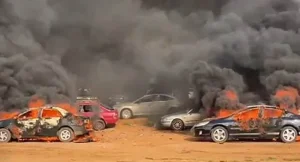
In Lagos State, the group received reports of suspected political thugs disrupting voting, firing shots and destroying ballot boxes and election materials in some areas.
Similar incidents were reported in parts of Abia, Rivers, Bayelsa, Akwa Ibom, Ebonyi and Osun states.
The Situation Room also raised concerns about the deployment of security personnel, saying some areas that required a stronger security presence appeared to have been inadequately covered.
According to reports from the CLEEN Foundation, about 39 per cent of observed polling units had three or more security personnel, while 27 per cent were considered inadequately policed.
Although the majority of security officers were reported to have acted professionally, the group said there were cases of excessive conduct and alleged partisanship in some locations.
It cited incidents in Imo, Abia and Rivers states and called for investigations into allegations of misconduct.
The Situation Room also questioned the involvement of the military in the elections.
It noted that the Nigerian Army had deployed personnel across parts of the country under Operation Python Dance and had established its own election situation room.
The organisation expressed concern over President Muhammadu Buhari’s warning that ballot-box snatchers could face severe consequences, arguing that electoral offenders should instead be arrested and prosecuted in accordance with the law.
The group referred to provisions of the Electoral Act which, it said, limited the involvement of the Armed Forces in elections primarily to securing the distribution of election materials and protecting election officials when requested by INEC.
It said reports of military personnel becoming directly involved around polling locations, particularly in Rivers State, should be investigated.
The observers also reported significant problems with smart card readers in several parts of the country.
According to the statement, card reader failures forced election officials to resort to manual accreditation in some areas, including Binji Local Government Area of Sokoto State and Owerri North Local Government Area of Imo State.
Similar problems were reported in Lagos, Ogun, Abia, Nasarawa, Kebbi, Kaduna and the Federal Capital Territory.
The Situation Room said INEC did not manage the election as efficiently as expected and described the exercise as a setback when compared with the 2015 general elections.
It consequently called for an independent investigation into the management of the electoral process, particularly the logistical failures that led to both the initial postponement and problems recorded during the rescheduled polls.
The group said such an inquiry should examine the late arrival of election officials, inadequate training of ad hoc staff, allegations of collusion between electoral officials and politicians, and the failure of smart card readers in affected polling units.
It also called for a special audit of results from locations where card-reader failure was particularly high.
The Situation Room urged INEC and security agencies to identify and prosecute individuals involved in the burning of electoral offices and materials, ballot-box snatching, voter suppression and other election-related offences.
It further called on the Inspector-General of Police to investigate allegations of excessive conduct by police officers and ensure that personnel found to have violated citizens’ rights were held accountable.
Political actors accused of encouraging or participating in election-related violence should also be investigated and prosecuted where appropriate, the group said.
The Situation Room maintained that INEC could not conduct free and fair elections without the cooperation of political parties and candidates.
It criticised the level of violence, hate speech and political hostility witnessed during the election period, saying such conduct contradicted commitments made by political leaders under the pre-election peace agreement.
The organisation urged politicians to respect electoral rules and ensure that their supporters acted within the law.
It also called for stronger enforcement of electoral laws and urged the National Assembly to accelerate the passage of legislation establishing an Electoral Offences Commission.
Finally, the Situation Room appealed to the international community to remain engaged in defending the integrity of Nigeria’s electoral process.
It particularly urged the United States and the United Kingdom to follow through on earlier warnings that individuals found to have undermined the elections or contributed to election-related violence could face sanctions.
The group maintained that greater accountability, improved election administration and stronger enforcement of electoral laws were necessary to restore public confidence in Nigeria’s democratic process.