Presidency Says Buhari’s Achievements Are Beyond Question
The Presidency has defended the record of President Muhammadu Buhari, insisting that the achievements of his administration were visible and could not reasonably be questioned.
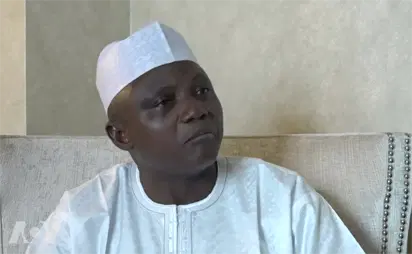
Senior Special Assistant to the President on Media and Publicity, Garba Shehu, made the assertion in a statement circulated to journalists in Abuja.
Shehu recalled that Buhari defeated then President Goodluck Jonathan in the 2015 presidential election after campaigning on three major promises: tackling insecurity and Boko Haram, improving the economy and creating jobs, and fighting corruption.
According to him, Buhari’s message and approach appealed to Nigerians who wanted a change in the country’s political and economic direction.
“Nobody can question President Buhari’s achievements. They are there for all to see,” Shehu said.
He argued that one of the administration’s major accomplishments was establishing a reputation for fighting corruption, claiming that the government had operated for almost four years without what he described as a major corruption scandal.
Shehu said the administration introduced several reforms aimed at improving transparency and reducing opportunities for the misuse of public funds.
Among the measures he cited were the Treasury Single Account, Integrated Payroll and Personnel Information System, Bank Verification Number initiative and the whistle-blower policy.
He maintained that these reforms had made it more difficult for public officials to withdraw large sums of government money without proper accountability.
The presidential spokesman also pointed to Nigeria’s participation in the Open Government Partnership and said the administration had introduced legal and institutional measures aimed at tracing, freezing, recovering and forfeiting assets believed to have been acquired through corruption.
On the economy, Shehu said the administration had recorded progress in agriculture and solid minerals and claimed that Nigeria had moved closer to self-sufficiency in rice production.
He said the Federal Government had also introduced financing and capacity-building programmes for micro, small and medium-sized enterprises.
According to him, the Presidential Enabling Business Environment Council, established in 2016, contributed to improvements in Nigeria’s position on the World Bank’s Ease of Doing Business rankings.
He added that several executive orders had been introduced to improve the business environment, promote efficiency and encourage greater use of locally produced goods and services.
Shehu also highlighted infrastructure development as another area in which the Buhari administration had recorded progress.
He said road projects were underway across the country, including the revival of some projects that had previously been abandoned.
The Presidency also cited investments in rail transportation, including the Abuja-Kaduna railway, Abuja light rail system and the Lagos-Ibadan standard-gauge railway, while plans for further railway expansion were being pursued.
Shehu said the administration had reconstructed the Abuja airport runway and completed new terminal buildings at airports in Abuja and Port Harcourt, with other airport projects also under development.
He further said several water supply, dam, irrigation and ecological projects had been completed across the six geopolitical zones.
In the power sector, Shehu claimed that generation and transmission capacity had increased under the administration and that thousands of solar power systems had been deployed to homes and communities.
He also pointed to the government’s Social Investment Programme as evidence of its focus on improving the welfare of ordinary Nigerians.
The programme included N-Power, the Home-Grown School Feeding Programme, the Government Enterprise and Empowerment Programme and the Conditional Cash Transfer initiative.
According to the Presidency, N-Power was expected to reach about 500,000 beneficiaries, while the school feeding programme was providing meals to millions of pupils.
Shehu said interest-free loans were also being provided to traders, artisans and farmers, while vulnerable households received monthly financial support through the cash-transfer programme.
On security, the Presidency said Buhari’s administration strengthened the Multinational Joint Task Force involving Nigeria, Niger, Chad, Cameroon and Benin to tackle Boko Haram and other cross-border security threats.
Shehu recalled that Buhari ordered the relocation of the military command centre for the fight against Boko Haram to Maiduguri shortly after taking office in 2015.
He said the military subsequently recaptured territories previously controlled by the insurgents, including their stronghold in Sambisa Forest.
The presidential aide also claimed that more than one million displaced persons had returned to their communities and thousands of people held by insurgents had been rescued.
He cited the release of 106 Chibok schoolgirls and 105 Dapchi schoolgirls as examples of progress made by the administration.
In foreign affairs, Shehu said the Buhari government had restored Nigeria’s influence and standing in regional and international diplomacy.
He concluded that the administration’s record across anti-corruption, infrastructure, social investment, security and economic reforms contributed significantly to Buhari’s re-election in the 2019 presidential election.