If America’s Megan Rapinoe and LeBron James Were Nigerian Athletes
The success of the United States women’s national football team at the FIFA Women’s World Cup offered more than a sporting spectacle; it also provided an example of how athletes can openly disagree with political leaders without losing their right to represent their country.
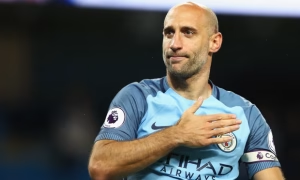
One of the most prominent figures in the American team was co-captain Megan Rapinoe, who was an outspoken critic of then United States President Donald Trump.
Rapinoe had publicly criticised Trump’s policies and leadership style and had also declined to sing the American national anthem before matches. She had earlier joined protests against racial injustice by kneeling during the anthem in solidarity with former NFL quarterback Colin Kaepernick.
Trump, in turn, publicly criticised Rapinoe and accused her of disrespecting the American flag, while Rapinoe continued to speak openly about her political views.
Despite the disagreement, Rapinoe remained an important member of the United States national team and played a major role in its World Cup triumph.
Another prominent member of the team, Alex Morgan, was also outspoken on social issues, particularly women’s rights and equal pay in football.
Morgan joined other members of the United States women’s team in challenging the country’s football authorities over disparities in compensation between male and female players.
The fact that athletes such as Rapinoe and Morgan could openly criticise political leaders while continuing to represent the United States raised broader questions about political tolerance and democratic culture.
Their experiences demonstrated that disagreement with a president does not automatically amount to disloyalty to the country.
In a democratic system, athletes are generally selected on the basis of ability, eligibility and performance rather than their political support for the government of the day.
Rapinoe’s outstanding performance at the World Cup further reinforced that distinction. Her political views did not prevent her from contributing significantly to the success of her country on the international stage.
The situation invites comparison with Nigeria, where political affiliation can sometimes influence perceptions of individuals seeking opportunities in public institutions or national assignments.
The important question is whether a Nigerian athlete who openly and repeatedly criticised a sitting president would still be allowed to represent the Super Eagles, Super Falcons or another national team solely on the basis of merit.
Nigeria’s democratic system, although adapted to the country’s circumstances, shares important principles with that of the United States, including freedom of expression and the right of citizens to disagree with those in power.
Democracy works best when citizens are able to participate in national development regardless of ethnicity, religion, language or political affiliation.
American basketball star LeBron James has similarly been a vocal critic of Trump and has publicly disagreed with him on political and social issues.
Yet such criticism did not prevent James from continuing his professional career or from remaining one of the most prominent sporting figures in the United States.
The lesson is that criticism of a political leader should not automatically transform a citizen into an enemy of the state.
In Nigeria, however, there is often a perception that people who openly oppose a president, governor or ruling political party risk being excluded from government opportunities or treated as hostile to the administration.
This tendency is not peculiar to one administration. Since Nigeria’s return to democratic rule in 1999, opposition politicians and their supporters have frequently accused successive governments of using state institutions against political opponents.
Businesses associated with opposition figures have sometimes alleged selective government scrutiny, while anti-corruption agencies have faced recurring accusations of applying different standards to government allies and opponents.
Whether such allegations are justified in individual cases or not, the perception itself can damage confidence in democratic institutions.
Both the ruling party and opposition are legitimate participants in the Nigerian democratic project and should have opportunities to contribute to national development.
Government officials should therefore avoid treating political disagreement as disloyalty, while opposition figures also have a responsibility to conduct political debate responsibly and constructively.
A strong opposition can improve governance by questioning policies, exposing weaknesses and presenting alternative ideas.
Likewise, a government has the right to pursue the programmes and policies on which it was elected, while citizens and opposition parties retain the constitutional right to criticise those policies.
Democracy depends on maintaining a balance between those competing rights.
Ultimately, a president governs the entire country, including citizens who voted for him, those who supported another candidate and those who did not vote at all.
Nigeria’s democratic development would therefore benefit from a political culture in which criticism of the president is not automatically interpreted as hatred of the country.
The experience of outspoken American athletes such as Rapinoe and James offers a broader lesson: patriotism does not require unquestioning support for political leaders. Citizens can disagree strongly with those in power while remaining committed to the success and development of their country.