Presidential Poll: Tribunal to Begin Hearing Atiku’s Petition Against Buhari on Wednesday
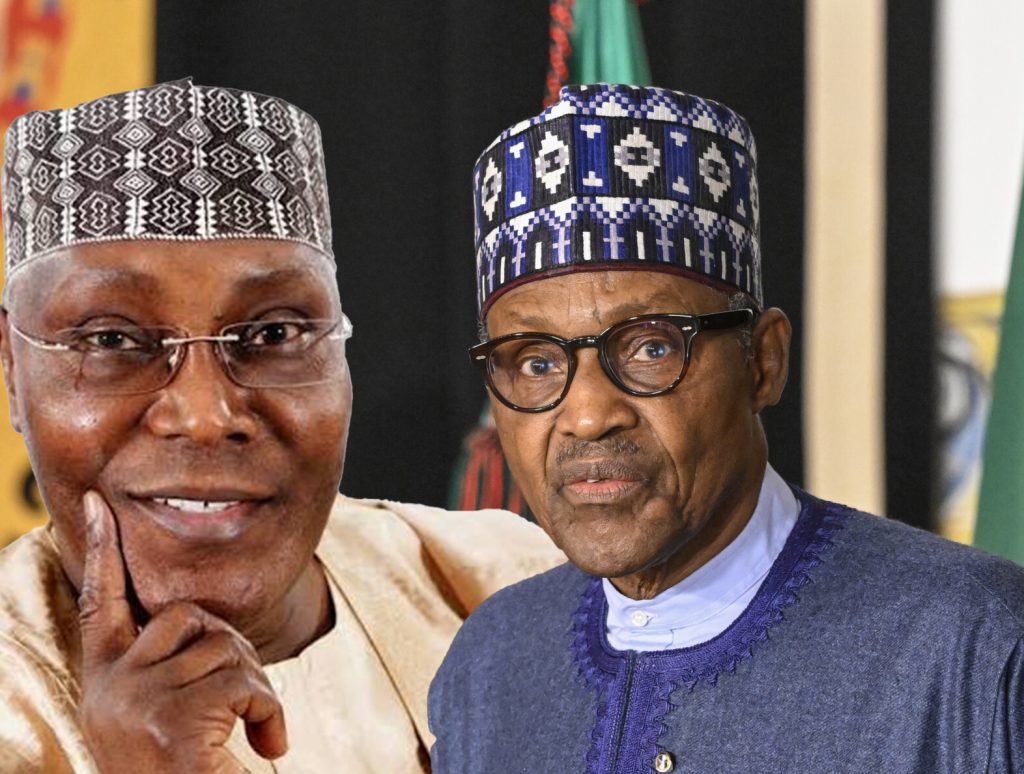
The Presidential Election Petition Tribunal sitting in Abuja is expected to begin hearing on Wednesday in the petition filed by the Peoples Democratic Party (PDP) and its presidential candidate, Atiku Abubakar, challenging the outcome of the February 23, 2019 presidential election.
Atiku and the PDP are asking the tribunal to set aside the declaration of President Muhammadu Buhari of the All Progressives Congress (APC) as winner of the election.
A five-member panel of Justices of the Court of Appeal is expected to conduct a pre-hearing session on the petition, which was filed on March 18.
It was not immediately clear whether the panel would be headed by the President of the Court of Appeal, Justice Zainab Bulkachuwa, or Justice Abdul Aboki, who had earlier issued orders permitting the parties to inspect electoral materials used during the election.
The Independent National Electoral Commission (INEC), President Buhari and the APC were named as respondents in the petition.
INEC had on February 27 declared Buhari winner of the presidential election with 15,191,847 votes, while Atiku was credited with 11,262,978 votes.
Atiku and the PDP, however, rejected the declared result and alleged that data they obtained from what they described as INEC’s server showed that Atiku defeated Buhari by more than 1.6 million votes.
The petitioners alleged that votes were unlawfully added to Buhari’s tally in some parts of the country while votes belonging to Atiku were deducted.
They said they intended to rely on oral and documentary evidence to establish that the results announced by INEC did not reflect what they considered the lawful votes cast during the election.
Atiku and the PDP also said they would call statisticians, forensic experts and fingerprint specialists to support their claims that some of the figures credited to Buhari did not represent valid votes cast at polling units.
The petitioners further indicated that they would rely on video recordings, photographs, newspaper reports and other materials which they claimed documented irregularities during the electoral process.
One of the grounds of the petition also challenged Buhari’s qualification to contest the election, with Atiku and the PDP arguing that he did not possess the minimum educational qualification required under the Constitution.
The petitioners presented their own breakdown of results from the states and alleged that irregular allocation of votes occurred at polling units and at ward, local government and state collation centres.
According to figures contained in their petition, Atiku allegedly polled 18,356,732 votes, while Buhari received 16,741,430 votes.
They maintained that a proper collation of the election results would therefore show that Atiku, rather than Buhari, secured the majority of lawful votes.
The PDP and Atiku also claimed that smart card readers used for voter accreditation transmitted election-related data electronically to INEC servers.
They asked the electoral commission to produce records allegedly transmitted from polling units as well as documents relating to the technological procedures used for the election.
The petitioners further questioned differences in figures published by INEC concerning the number of registered voters and accredited voters.
They alleged that while one figure placed the number of registered voters at 84,004,084, another later figure stood at 82,344,107, creating a difference of more than 1.6 million voters.
Atiku and the PDP also claimed that the actual number of accredited voters was higher than the figure announced by the electoral commission.
They argued that INEC’s election guidelines made the use of smart card readers mandatory and contended that results from areas where the devices were not used in accordance with the rules should not have been accepted.
The petitioners asked the tribunal to declare that Buhari was not duly elected by a majority of lawful votes and that his return as President was therefore invalid.
They also asked the tribunal to declare Atiku the duly elected President on the ground that he allegedly secured the highest number of lawful votes and met the constitutional requirements for election.
The PDP and Atiku further requested an order directing INEC to issue Atiku a Certificate of Return as President.
They also asked the tribunal to determine that Buhari was not qualified to contest the election and alleged that information contained in documents submitted in support of his candidacy was false.
Alternatively, the petitioners asked the tribunal to nullify the February 23 presidential election and order INEC to conduct a fresh poll.