Presidential Poll: Tribunal Reserves Judgment in HDP’s Petition Against Buhari
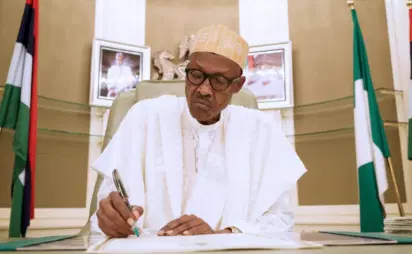
The Presidential Election Petition Tribunal sitting in Abuja has reserved judgment in the petition filed by the Hope Democratic Party (HDP) and its presidential candidate, Ambrose Owuru, challenging President Muhammadu Buhari’s re-election.
The five-member panel, led by Justice Mohammed Garba, reserved judgment after lawyers representing all the parties adopted their final written addresses.
Counsel to the petitioners, Chukwunoyerem Njoku, urged the tribunal to uphold the petition and nullify the outcome of the February 23, 2019 presidential election, which INEC declared in Buhari’s favour.
The HDP argued that the Independent National Electoral Commission failed to comply with provisions of the Electoral Act when it postponed the presidential election originally scheduled for February 16.
The party further claimed that Owuru secured more than 50 million votes in what it described as a referendum conducted after the postponement by dissatisfied voters and observer groups.
The petitioners asked the tribunal to consider the affidavit and documentary evidence they tendered, as well as the testimony of their sole witness, in deciding the case.
President Buhari, INEC and the All Progressives Congress, however, urged the tribunal to dismiss the petition, describing it as incompetent and lacking in merit.
Buhari was represented by Wole Olanipekun, SAN, INEC by Yunus Usman, SAN, while the APC was represented by Akin Olujinmi, SAN.
INEC specifically asked the tribunal to reject the purported referendum and impose substantial costs, arguing that such claims should not be encouraged in future elections.
The tribunal said the date for judgment would be communicated to the parties.
The HDP and Owuru had earlier closed their case after calling one witness, Yusuf Ibrahim, who insisted that the party defeated Buhari in the purported February 16 referendum.
The petitioners also tendered documents including certified newspaper publications, INEC’s final list of presidential candidates and a report said to have been produced by a group identified as Citizens Observers Referendum/Election Right Protection of Nigeria.
The tribunal admitted the documents as exhibits, although the respondents objected to their admissibility and asked the court not to attach evidential weight to them.
Under cross-examination, Ibrahim acknowledged that INEC was the legally recognised body responsible for conducting elections in Nigeria.
He nevertheless maintained that the referendum was conducted to allow what he described as the “people’s voice” to be heard.
Asked whether the exercise had taken place physically or through some other means, Ibrahim said it was a physical exercise and was neither conducted online nor through any INEC server.
He also clarified that the HDP was not asking to be declared winner on the basis of the February 23 presidential election results, but on the strength of the alleged referendum.
None of the respondents called witnesses before closing their respective cases.
The tribunal had earlier rejected an application by the HDP seeking the immediate removal of Buhari and the swearing-in of Owuru as President.
In that application, the petitioners had asked the tribunal to direct the Chief Justice of Nigeria to swear in Owuru within 48 hours, relying on the outcome of the purported referendum.
They alleged that INEC postponed the February 16 election after realising Buhari might lose.
The tribunal dismissed the application, describing it as alien to Nigerian law.
With final arguments concluded, the parties were left awaiting the tribunal’s judgment on the substantive petition.