Presidential Election Tribunal Assures Nigerians of Fair Hearing, Vows to Decide Petitions Without Fear or Favour
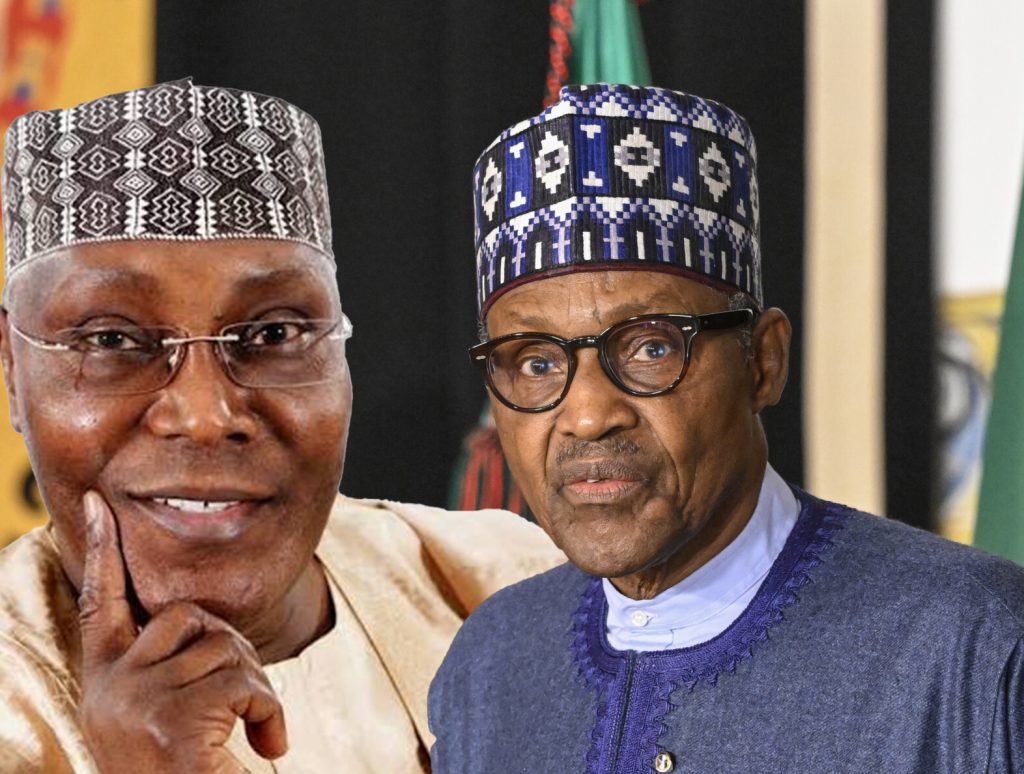
The Presidential Election Petition Tribunal sitting in Abuja has assured Nigerians that it would hear and determine all petitions challenging President Muhammadu Buhari’s re-election without fear or favour.
The five-member tribunal, headed by the President of the Court of Appeal, Justice Zainab Bulkachuwa, said its decisions would be guided strictly by the Constitution, electoral laws and accepted judicial standards.
Speaking during the tribunal’s inaugural sitting, Bulkachuwa assured all parties that they would be given equal opportunity to present their cases, while urging lawyers and litigants to conduct themselves responsibly throughout the proceedings.
She stressed that judicial independence remained essential to the proper resolution of election disputes and said the tribunal must be allowed to perform its constitutional responsibilities without external pressure.
According to her, the Court of Appeal would ensure that justice was dispensed fairly to all parties irrespective of political affiliation or status.
Bulkachuwa also appealed for cooperation from lawyers representing parties in the four petitions challenging the outcome of the February 23, 2019 presidential election.
She urged counsel to maintain decorum, professionalism and a strong sense of responsibility to enable the tribunal to reach fair decisions.
The tribunal chairman also warned lawyers, parties and members of the public against attempting to prejudge proceedings through public commentary.
She expressed concern that high-profile cases were sometimes extensively debated in traditional and social media before courts delivered their decisions.
Bulkachuwa therefore advised lawyers involved in the presidential petitions to avoid making public analyses of proceedings after each sitting.
She said election petitions should be treated like other court cases, with arguments properly presented before the tribunal rather than being decided in the media.
The tribunal assured stakeholders that relevant information would be released when necessary and warned that misconduct capable of interfering with proceedings would not be tolerated.
Bulkachuwa noted that presidential election petitions had previously been heard following the elections of 1999, 2003, 2007 and 2011 and said the judiciary was familiar with the responsibility of resolving such politically sensitive disputes.
She also disclosed that election tribunals had received hundreds of petitions arising from the 2019 general elections.
According to her, 78 panels had been constituted across the country, with Jigawa State being the only state where no election petition had been filed at the time.
She said a total of 786 election petitions were before tribunals nationwide, with Imo State recording the highest number at 76, requiring six separate panels.
Other members of the presidential tribunal were Justices Abdul Aboki, Samuel Oseji, Joseph Ikyegh and Peter Olabisi Ige.
The tribunal indicated that after completing preliminary proceedings, substantive hearings would continue on a day-to-day basis.
Among those present at the inaugural sitting were PDP vice-presidential candidate Peter Obi and former Chairman of the Economic and Financial Crimes Commission, Nuhu Ribadu.
Supporters of PDP presidential candidate Atiku Abubakar were also present around the court premises, with some carrying banners and expressing support for his legal challenge.
Following the inaugural remarks, the parties began identifying the various applications, responses and objections already filed before the tribunal.
The first petition, filed by Hope Democratic Party presidential candidate Ambrose Owuru, was adjourned to May 14 after he sought permission to correct typographical errors in his petition.
Owuru, who was credited with 1,663 votes in the presidential election, requested permission through his lawyer to amend the affected sections.
The respondents said they required time to respond to the application.
The second petition was filed by Atiku Abubakar and the Peoples Democratic Party against INEC, President Buhari and the All Progressives Congress.
INEC informed the tribunal that it had filed several preliminary applications seeking the dismissal of Atiku’s petition and the striking out of some paragraphs.
President Buhari, represented by a legal team led by Wole Olanipekun, SAN, also informed the tribunal that his response contained several preliminary objections which he wanted the panel to consider.
The APC, represented by a team led by Lateef Fagbemi, SAN, similarly asked the tribunal to dismiss the petition.
Atiku and the PDP, represented by a team of Senior Advocates led by Livy Uzoukwu, said they had filed responses to the objections raised by the respondents.
With the agreement of the parties, the tribunal fixed May 15 and 16 for the hearing of pending applications during the pre-hearing stage.
Proceedings in two other petitions were delayed because of issues relating to proper service on the respondents.
One of the petitions was filed by the Coalition for Change and its presidential candidate, Geff Chizee Ojinka, while another was filed by Peoples Democratic Movement presidential candidate Aminchi Habu.
The Coalition for Change alleged that Buhari’s re-election was affected by substantial non-compliance with electoral laws and argued that the irregularities were significant enough to invalidate the result.
Unlike the other petitions, the party also named Vice President Yemi Osinbajo as a respondent.
The PDM, meanwhile, sought a fresh presidential election, alleging that its party logo was omitted from the ballot paper.
INEC had declared Buhari winner of the February 23 presidential election with 15,191,847 votes, while Atiku was credited with 11,262,978 votes.
Atiku and the PDP rejected the result and filed a petition challenging Buhari’s victory.
They alleged that information they obtained from what they described as INEC’s server showed that Atiku had received more votes than Buhari.
The petitioners also accused INEC of unlawfully allocating votes to Buhari and deducting votes they claimed belonged to Atiku in some states.
They said they intended to rely on statisticians, forensic experts, fingerprint specialists and documentary evidence to prove their allegations.
Atiku and the PDP also challenged Buhari’s qualification to contest the election, arguing that he did not possess the minimum educational qualification required by the Constitution.
Their principal request was for the tribunal to declare Atiku the duly elected President on the basis that he allegedly secured the highest number of lawful votes.
Alternatively, they asked the tribunal to nullify the February 23 presidential election and order a fresh poll.