Onnoghen: NJC Submits Investigative Report to Buhari
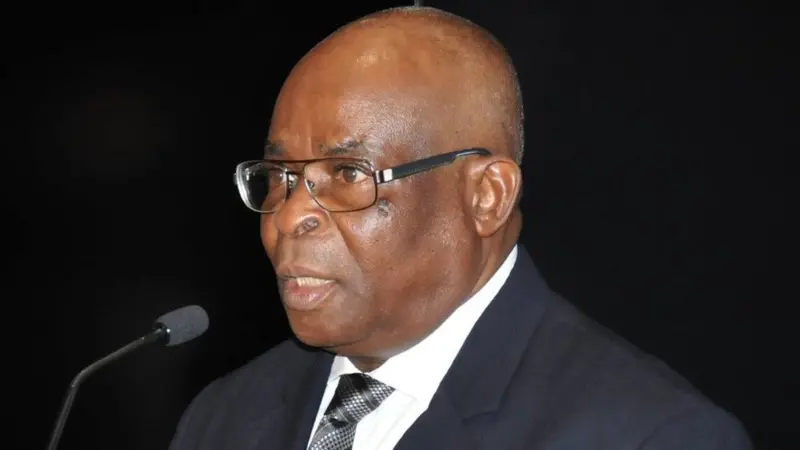
The National Judicial Council (NJC) has forwarded the outcome of its investigation into allegations of misconduct against suspended Chief Justice of Nigeria (CJN), Justice Walter Onnoghen, to President Muhammadu Buhari for further action.
The NJC disclosed this after an emergency meeting convened to consider the report of a five-member committee set up to investigate petitions against Onnoghen and Acting Chief Justice of Nigeria, Justice Ibrahim Tanko Muhammad.
In a statement signed by its Director of Information, Soji Oye, the Council said it decided not to consider allegations relating to Onnoghen’s declaration of assets because the matter was already before a court.
According to the NJC, considering the asset-declaration allegations while judicial proceedings were ongoing would have been inappropriate.
The Council, however, said it reached a decision on petitions submitted by the Economic and Financial Crimes Commission (EFCC) and other complainants and had communicated its findings to President Buhari.
It declined to make the details of its decision public at the time, saying it would be improper to do so before formally conveying the outcome to the President.
The development followed the NJC’s February 13 decision that allegations against Onnoghen warranted investigation.
The Council had also agreed to investigate Justice Muhammad over an allegation of misconduct arising from his acceptance of appointment and swearing-in as Acting CJN following Onnoghen’s suspension.
In accordance with the Judicial Discipline Regulations, the NJC constituted a five-member investigative panel chaired by retired Supreme Court Justice S.A. Akintan.
The committee was directed to examine the petitions, consider responses from the affected judicial officers and submit its findings to the Council for a final decision.
During the investigation, Onnoghen challenged the competence of two petitions submitted against him by the EFCC and described several of the allegations as malicious and speculative.
The anti-graft agency had alleged, among other things, that Onnoghen received a Mercedes-Benz vehicle and financial gifts from lawyers who had cases before the courts.
The EFCC alleged that Senior Advocate of Nigeria Joe Agi provided Onnoghen with a Mercedes-Benz GL 450 valued at about N7 million and later appeared in a case before a Supreme Court panel that included the then CJN.
The agency suggested that the transaction amounted to an improper gift intended to influence judicial proceedings.
Onnoghen rejected the allegation, insisting that the vehicle was purchased from Agi rather than given to him as a gift.
He said Agi had access to automobile dealership services in the United States and had testified before the NJC that Onnoghen ordered and paid for the vehicle in instalments.
Onnoghen further argued that the vehicle transaction occurred in 2008, while the case cited by the EFCC came before the Supreme Court later.
He maintained that it was unreasonable to suggest that the vehicle was intended to influence the outcome of a case decided by a multi-member panel of Supreme Court justices.
The EFCC also alleged that Onnoghen received monetary transfers from several Senior Advocates of Nigeria, including Paul Usoro, Emeka Etiaba, Onyechi Ikpeazu, Eze Duru Iheoma and Ogunsanya Adewunmi.
According to the commission, the payments, ranging from about N250,000 to N300,000, were transferred to Onnoghen’s accounts in 2015.
Onnoghen acknowledged receiving some of the payments but denied that they were bribes.
He explained that the funds were unsolicited goodwill gifts given in connection with the wedding of his daughter in 2015.
To support his explanation, Onnoghen reportedly tendered a copy of the wedding invitation before the investigative panel.
His legal team argued that judicial officers were permitted under applicable rules to receive personal gifts from relatives and friends on occasions recognised by custom.
Onnoghen also disputed attempts to connect the payments to cases handled by the Supreme Court, noting that he was not a member of the panels that decided some of the cases cited by the EFCC.
He argued that the timing of the payments and the cases did not support the allegation that the money was intended to influence judicial decisions.
The EFCC further questioned foreign travel allowances, or estacodes, paid to Onnoghen, alleging that some amounts exceeded approved limits.
The commission told the NJC that millions of naira had been paid to Onnoghen between 2017 and 2018 through an official identified as the Chief Protocol Officer of the Supreme Court.
Onnoghen denied any wrongdoing, saying the amounts paid to him were calculated by the appropriate accounting officers and represented official travel allowances to which he was entitled.
His position was reportedly supported by the Director of Finance at the Supreme Court, who told the NJC panel that payment of estacodes in cash to justices was established practice.
Onnoghen maintained that individual justices did not determine the amount of estacode payable to them and merely received amounts calculated and approved by the relevant departments.
He consequently asked the NJC to dismiss the EFCC petitions, arguing that they were based largely on intelligence reports rather than complaints relating directly to the performance of his judicial duties.
At the time, Onnoghen was separately facing a six-count charge before the Code of Conduct Tribunal in Abuja over alleged failure to properly declare his assets.
The NJC therefore excluded that aspect of the controversy from its deliberations because the matter remained the subject of ongoing judicial proceedings.