Governorship Re-Run: Ganduje, Ortom and Lalong Face Crucial Electoral Showdown
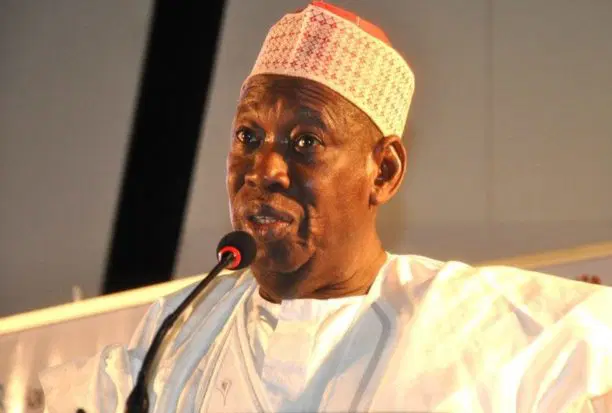
The supplementary governorship elections in several states have turned into decisive political battles for incumbent governors and their major challengers, following the declaration of the March 9 governorship elections as inconclusive in six states.
The Independent National Electoral Commission (INEC) declared the governorship elections inconclusive in Kano, Sokoto, Bauchi, Plateau, Benue and Adamawa states and scheduled supplementary polls in the affected areas. The election in Adamawa was, however, delayed following a court order.
In the days leading to the rerun elections, the two major political parties, the All Progressives Congress (APC) and the Peoples Democratic Party (PDP), intensified campaigns in the affected areas in an effort to win over voters.
Political activities increased significantly, with reports of hurried road construction, provision of boreholes and distribution of various items in communities where supplementary elections were scheduled to take place.
For incumbent governors seeking another term, the rerun elections represented a major test of their political strength, while opposition candidates saw the exercise as an opportunity to unseat them.
In Plateau State, the contest remained largely between Governor Simon Lalong of the APC and PDP candidate Jeremiah Useni.
Lalong entered the supplementary election with 583,255 votes, while Useni had 538,326 votes, leaving the governor with a lead of 44,929.
However, the number of cancelled votes stood at 49,377, making the rerun necessary and theoretically giving the PDP an opportunity to overturn the result.
Mangu Local Government Area, which had more than 25,000 cancelled votes, became one of the major battlegrounds.
Both parties intensified campaigns in the area, while the PDP accused the APC of attempting to influence voters through the distribution of gifts.
Useni maintained that he was still capable of winning despite Lalong’s lead and warned against any attempt to manipulate the supplementary election.
He alleged that the March 9 election was affected by vote buying, intimidation and irregularities in some polling units.
The PDP candidate also claimed that some security personnel interfered with the electoral process and that card readers were not used in certain locations.
He urged his supporters to remain determined and insisted that he would continue to protect what he described as the mandate of Plateau voters.
The election also came against concerns about declining voter participation in Plateau State.
While residents had turned out in significant numbers for the February 23 Presidential and National Assembly elections, participation dropped during the March 9 governorship and State House of Assembly elections.
Some residents attributed the decline to concerns about security, dissatisfaction with previous election results and a belief that their votes might not count.
Public affairs analysts also identified ethnic and religious politics, vote buying, poor voter education, electoral violence and the militarisation of elections as factors that affected public confidence in the process.
In Bauchi State, the political contest was equally intense between incumbent Governor Mohammed Abubakar of the APC and PDP candidate Bala Mohammed.
The dispute surrounding the result from Tafawa Balewa Local Government Area became central to the election.
Bala Mohammed was already leading Governor Abubakar by 4,059 votes based on the results announced from other parts of the state.
Tafawa Balewa, which had about 139,000 registered voters, was regarded as a stronghold of the PDP and was also part of the political base of then Speaker of the House of Representatives Yakubu Dogara, a major supporter of Bala Mohammed.
The controversy deepened after a court order stopped further collation of the Tafawa Balewa result.
Supporters of Bala Mohammed demanded that he be declared winner, while supporters of the governor called for the cancellation of results from areas where they alleged electoral irregularities had occurred.
Both parties intensified their campaigns in communities affected by the rerun.
There were also unconfirmed reports of gifts, including motorcycles, vehicles and cash, being distributed in an attempt to influence voters.
The PDP, however, relied heavily on its traditional strength in Tafawa Balewa and surrounding areas.
Aside from the disputed Tafawa Balewa result, cancelled votes from other parts of the state stood at more than 22,000, making the supplementary exercise capable of affecting the final outcome.
INEC said it would proceed with rerun elections in areas not affected by the court order while awaiting a legal resolution of the Tafawa Balewa issue.
In Kano State, the supplementary election attracted even greater national attention because the state was considered one of the strongest political bases of the APC.
During the February presidential election, President Muhammadu Buhari secured 1,464,768 votes in Kano, representing a large majority of the votes cast, while the PDP received 391,593.
The figures had created expectations that Governor Abdullahi Ganduje would comfortably win re-election.
However, the March 9 governorship election produced a different result.
PDP candidate Abba Kabir Yusuf secured 1,014,474 votes, while Ganduje polled 987,819, leaving the PDP candidate ahead by more than 26,000 votes before the election was declared inconclusive.
Results from 234 polling units, containing more than 140,000 registered voters, had been cancelled, making the supplementary election decisive.
Although the APC won more local government areas, the PDP recorded larger winning margins in some of its strongholds, allowing Yusuf to establish the overall lead.
One of the most controversial issues involved results from Gama Ward in Nasarawa Local Government Area after the collation process was disrupted.
INEC regenerated results from several wards using records available to the commission but cancelled the Gama Ward result.
The PDP objected, insisting that voting had taken place and that the results should have been included in the final tally.
Tension increased following the decision, prompting interventions from prominent figures including the Kano State Commissioner of Police, Emir of Kano Muhammadu Sanusi II, former presidential candidate Bashir Tofa and former governor Rabiu Kwankwaso.
They appealed to residents and supporters of the rival political parties to remain peaceful and allow the supplementary election to proceed.
Security agencies also warned that anyone attempting to disrupt the election would face the law regardless of political status.
As the supplementary elections approached, both the APC and PDP expressed confidence of victory across the affected states.
For the incumbent governors, the rerun represented a fight for political survival, while their challengers regarded it as an opportunity to complete what they believed had begun during the March 9 polls.
The outcome of the supplementary elections was therefore expected to determine not only who governed the affected states but also the political strength and influence of the two major parties in some of Nigeria’s most competitive electoral battlegrounds.