CJN Drawn Into Nigeria’s Political Arena
The CJN in Nigeria’s Political Arena
The office of the Chief Justice of Nigeria (CJN) occupies a powerful position in the country’s democratic system. As head of the judiciary, the CJN leads an arm of government responsible for interpreting the Constitution and laws of the country and, through the courts, reviewing decisions and actions taken by the executive and legislature.
Over the years, the Supreme Court has delivered several decisions with major political and constitutional consequences. Among them was the 2007 judgment that removed Andy Uba as Governor of Anambra State only days after he assumed office, as well as earlier decisions concerning the country’s revenue allocation system. Following the 2015 elections, the court also upheld the elections of Peoples Democratic Party (PDP) governors in Rivers and Akwa Ibom states.
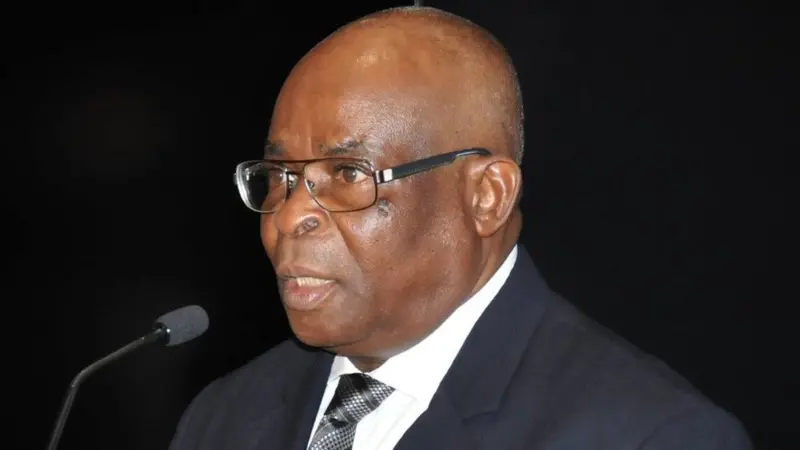
Justice Walter Onnoghen participated in some important Supreme Court decisions before eventually becoming Chief Justice. At the height of the controversy surrounding his suspension, some critics of President Muhammadu Buhari’s administration suggested that Onnoghen’s judicial history and the sensitive role of the CJN in election disputes might have contributed to the political tension surrounding him.
Suspension Divides Political Parties
Onnoghen’s suspension generated sharp disagreement between the ruling All Progressives Congress (APC) and the opposition PDP.
The PDP temporarily suspended its presidential campaign activities in protest against the decision. The announcement was made by the party’s spokesman, Kola Ologbondiyan.
The Federal Government, however, rejected the opposition’s criticism. Then Minister of Information and Culture, Lai Mohammed, argued that the PDP’s strong reaction raised questions about its interest in Onnoghen remaining in office.
The disagreement highlighted the political significance of the CJN’s position, particularly during an election period.
How the CJN Is Appointed
The Chief Justice heads the judiciary, one of Nigeria’s three arms of government. The other two are the executive, headed by the President, and the legislature.
Under the 1999 Constitution, the appointment process begins with a recommendation from the National Judicial Council (NJC). Traditionally, the council recommends the most senior Justice of the Supreme Court for the position.
The President subsequently nominates the recommended candidate, subject to confirmation by the Senate.
Following the retirement of Justice Mahmud Mohammed after reaching the mandatory retirement age of 70, the NJC recommended Justice Walter Onnoghen to President Buhari as his successor.
However, Buhari did not immediately forward Onnoghen’s nomination to the Senate, causing controversy and speculation over the delay.
The matter attracted additional attention because Onnoghen would become the first southerner in decades to occupy the position.
Reports at the time suggested that political and other influential figures appealed to the presidency to resolve the issue and complete the appointment process.
Eventually, while Buhari was away on medical leave, Acting President Yemi Osinbajo forwarded Onnoghen’s name to the Senate in 2017, where his nomination was confirmed.
Unlike the United States, where Supreme Court justices may serve for life, Nigerian Supreme Court justices must retire at the constitutionally prescribed age. Senate confirmation hearings for CJN nominees have also generally been less politically contentious than similar judicial appointments in some other democracies.
CJN’s Role in Election Disputes
One of the most politically sensitive responsibilities connected with the office of the Chief Justice is the judiciary’s role in resolving election disputes.
The CJN has responsibilities connected with the judicial structures that deal with election petitions, while presidential and governorship disputes can eventually reach the Supreme Court for final determination.
As chairman of the National Judicial Council, the CJN also occupies an important administrative position within the judiciary.
This influence has historically attracted political attention whenever major election disputes arise.
A notable example involved former Court of Appeal President Justice Ayo Salami and then Chief Justice Aloysius Katsina-Alu. Their disagreement over allegations relating to an election case generated a major controversy within the judiciary and eventually resulted in disciplinary proceedings involving Salami.
Such incidents illustrate why the position of the CJN often attracts intense scrutiny, particularly during election periods.
Osinbajo and Other Lawyers in Buhari’s Government Criticised
The controversy over Onnoghen’s suspension also placed Vice President Yemi Osinbajo under scrutiny because of his background as a professor of law, Senior Advocate of Nigeria and senior member of the Buhari administration.
Human rights lawyer Femi Falana, SAN, criticised lawyers serving in the Federal Government for allegedly failing to advise the President against suspending the Chief Justice on the basis of an ex parte order from the Code of Conduct Tribunal.
Falana argued that senior lawyers in the administration should have warned the President about the constitutional and legal implications of the decision.
Apart from Osinbajo, other senior lawyers in Buhari’s cabinet included then Minister of Power, Works and Housing Babatunde Fashola, SAN, and Attorney-General of the Federation and Minister of Justice Abubakar Malami, SAN.
The controversy surrounding Onnoghen ultimately demonstrated how closely the judiciary can become connected to Nigeria’s political environment, particularly during an election season when courts may be required to determine disputes capable of deciding who occupies some of the most powerful offices in the country.