APC Chieftains Reveal Reasons Party Lost Edo Governorship Election to PDP
Senior members of the All Progressives Congress (APC) have attributed the party’s defeat in the Edo State governorship election to internal divisions, poor campaign coordination, lingering disputes surrounding Governor Godwin Obaseki’s exit from the party and wider political calculations ahead of the 2023 presidential election.
Obaseki, candidate of the Peoples Democratic Party (PDP), won the September 19, 2020 election with 307,955 votes, defeating the APC candidate, Osagie Ize-Iyamu, who polled 223,619 votes.
Some APC leaders said the party entered the election weakened by internal disagreements that had followed the dispute between Obaseki and former APC National Chairman Adams Oshiomhole.
Prince Benjamin Apugo, a member of the party’s Board of Trustees, said the APC lost a state it could have retained because of avoidable internal wrangling.
According to him, Edo had remained an APC-controlled state until the dispute that eventually forced Obaseki and his supporters to defect to the PDP.
Other party sources alleged that political calculations ahead of the 2023 presidential election also influenced the level of commitment shown by some APC leaders during the Edo campaign.
They questioned why many members of the 49-member National Campaign Council were barely visible during the campaign and why the party did not hold the kind of major closing rally usually associated with an important governorship contest.
One source noted that Kano State Governor Abdullahi Ganduje, chairman of the campaign council, and Imo State Governor Hope Uzodimma, his deputy, were among the few governors who maintained a visible presence in Edo.
The source suggested that disagreements over the treatment of Obaseki and political rivalries within the national leadership may have affected the party’s ability to present a united front.
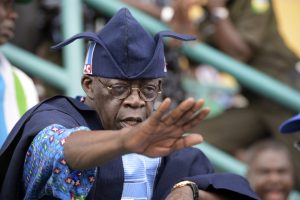
Another APC figure alleged that some governors were uncomfortable with Oshiomhole’s influence and with perceptions that he was politically aligned with former Lagos State Governor Bola Tinubu ahead of the 2023 presidential race.
Those claims reflected internal party interpretations and were not independently established.
APC Caretaker and Extraordinary National Convention Planning Committee member Ismail Ahmed said the party would conduct a post-election review to determine exactly what went wrong.
Ahmed said the APC had expected to win and believed it had assembled a strong campaign structure, but acknowledged that the result showed there were factors the party had failed to anticipate.
He also expressed concern that the defeat left the APC without a state under its control in the South-South.
Kaduna State Governor Nasir El-Rufai similarly said he had expected the APC to win based on information available in the weeks before the election.
El-Rufai said surveys conducted about three weeks before voting suggested the APC was ahead, but acknowledged that many voters might have made their final decisions closer to election day.
He nevertheless praised President Muhammadu Buhari for not interfering with the electoral process and described the election as reasonably peaceful.
APC chieftain Jackson Lekan Ojo blamed the defeat partly on what he described as the excessive influence of Oshiomhole and Tinubu.
Ojo argued that the treatment of Obaseki before the APC primary generated sympathy for the governor and strengthened his support among voters.
He also said Oshiomhole’s prominent role in Ize-Iyamu’s campaign created difficulties because statements Oshiomhole had made against Ize-Iyamu during the 2016 governorship election were repeatedly used by the PDP against the APC candidate.
According to Ojo, Ize-Iyamu’s personal political strength accounted for much of the support he received, while the APC platform itself added little to his electoral prospects.
The APC national leadership, however, accepted the result and congratulated Obaseki.
Chairman of the party’s caretaker committee and Yobe State Governor Mai Mala Buni described the election as a victory for democracy and commended INEC, security agencies and participating political parties for the conduct of the poll.
Buni urged APC members to remain united, learn from the problems that contributed to the defeat and focus on the forthcoming Ondo State governorship election.
Following the result, Buhari also met Buni and Ganduje at the Presidential Villa in Abuja. Although details of the meeting were not officially disclosed, it came shortly after the APC’s defeat in Edo.
Meanwhile, former President Olusegun Obasanjo congratulated Obaseki and urged him to be magnanimous in victory.
Obasanjo said the governor should extend a hand of fellowship to his opponents and govern all residents of Edo State irrespective of their political affiliations.
Former Senate President David Mark similarly described Obaseki’s re-election as a triumph of the people’s will and urged him to use his second term to deepen good governance.
Civil society organisations also praised the conduct of the election.
The Nigeria Civil Society Situation Room, a coalition of about 70 organisations, said INEC’s handling of the poll represented an improvement over some previous elections and commended the professionalism of security agencies.
The coalition, however, expressed concern about vote-buying and urged the National Assembly to strengthen enforcement of electoral laws.
For the APC, the defeat prompted calls for deeper internal reconciliation and a review of the political and organisational failures that contributed to the loss of its last governorship stronghold in the South-South.