How Buhari Withheld Assent to 40 Bills Passed by the National Assembly
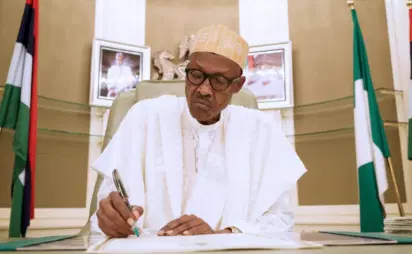
President Muhammadu Buhari declined assent to two additional bills passed by the National Assembly, bringing to 40 the number of bills he had rejected since the inauguration of the 8th National Assembly on June 9, 2015.
Buhari communicated his decision in separate letters to Senate President Bukola Saraki, which were read during plenary.
The two latest bills were the Nigeria Tourism Development Authority (Repeal and Re-enactment) Bill and the Nigeria Inland Waterways Authority Bill.
Explaining his decision on the tourism bill, Buhari said some of its provisions conflicted with the 1999 Constitution.
He also objected to proposed tourism levies, including charges on inbound and outbound international travellers, a one per cent contribution on hotel room rates and a one per cent levy on the revenues of banks, telecommunications companies and other corporate organisations.
According to the President, the proposed charges would create additional financial burdens for businesses and could negatively affect the growth of Nigeria’s tourism and hospitality industry.
Buhari also declined assent to the Nigeria Inland Waterways Authority Bill, citing constitutional concerns, overlapping responsibilities and what he considered excessive funding provisions.
He argued that the bill’s definition of inland waterways was too broad because it covered virtually all rivers, lakes and lagoons regardless of their location.
The President said the Constitution limited the National Assembly’s legislative powers over waterways principally to those affecting more than one state or classified as international or interstate waterways.
He also expressed concern that the bill appeared to place the Federal Ministries of Water Resources and Environment, as well as the Nigerian Ports Authority, under the supervision of the Nigeria Inland Waterways Authority.
Buhari further objected to provisions that would allocate portions of the Ports Development Levy, Ecological Fund, oil and gas revenues and fees paid by power companies to the authority.
According to him, those provisions were excessive and could negatively affect Federal Government revenues.
Among the other bills previously rejected by Buhari were amendments to the Electoral Act, including versions of the bill that were returned to the National Assembly several times.
One version of the Electoral Act amendment bill was rejected because the President said some drafting problems could create difficulties in interpreting and implementing the legislation.
He also argued that certain amendments could adversely affect INEC’s preparations and management of elections.
Another version was rejected on the ground that its proposed timetable could leave INEC with insufficient time to compile candidates’ lists and manage the primaries of the large number of registered political parties ahead of elections.
Buhari also withheld assent from several constitutional amendment bills.
One sought to provide for an annual State of the Nation Address by the President. Buhari said parts of the bill required redrafting and expressed concern that fixing a specific date for such an address in the Constitution could create practical difficulties.
Another constitutional amendment proposal involved the Nigeria Security and Civil Defence Corps. The President argued that some of the proposed functions were already being carried out by other government agencies.
He also rejected the Industrial Development (Income Tax Relief) Amendment Bill, saying additional consultations were underway over tax incentives for expansion projects, investments in rural areas, agriculture and agro-processing.
The Immigration Bill was rejected partly because Buhari said some of its provisions could negatively affect Nigeria’s Ease of Doing Business reforms.
He also declined assent to the Chartered Institute of Pension Practitioners Bill because he considered its functions to overlap with those of an existing professional body.
The Revenue Mobilisation Allocation and Fiscal Commission Amendment Bill was also rejected.
Buhari argued that the proposed legislation could interfere with the administration of federal revenue-generating agencies and transfer some oversight responsibilities from the President and Minister of Finance to the commission.
He said some provisions could also conflict with existing laws governing the Federal Inland Revenue Service.
The President declined assent to the Maritime Security Operations Bill, saying it risked duplicating the functions of the Nigerian Maritime Administration and Safety Agency.
Instead, he encouraged the National Assembly to prioritise the Suppression of Piracy and Other Maritime Offences Bill, which he said could provide a more comprehensive framework for maritime security.
Buhari also cited drafting problems in rejecting the Bankruptcy and Insolvency Bill.
He opposed another bill concerning federal polytechnics because he said it would weaken presidential authority over the appointment and removal of members of governing councils.
The Small and Medium Enterprise Agency Bill was also returned unsigned.
Buhari objected to a proposed 2.5 per cent levy on the pre-tax profits of certain companies, a one per cent levy on imports and a five per cent levy on luxury goods.
He argued that the charges would increase the cost of doing business and potentially duplicate existing government taxation measures.
The President also expressed concern that the proposed agency could duplicate functions already performed by institutions such as the Bank of Industry and increase recurrent public expenditure through the creation of additional government bodies.
He similarly rejected the Energy Commission Amendment Bill, saying some of its provisions encroached on the responsibilities of the Rural Electrification Agency, particularly in extending electricity to underserved communities.
Despite withholding assent from a number of bills, Buhari continued to submit legislation to the National Assembly for consideration, including the Food Safety and Quality Bill.
He also rejected the Federal Roads Authority Bill, arguing that aspects of the proposed legislation could undermine the supervisory responsibilities of the relevant federal ministry.
The Presidency maintained that the decisions to withhold assent were based largely on constitutional conflicts, duplication of functions, excessive financial obligations, drafting problems and concerns about the practical implementation of the proposed laws.