Buhari–Atiku Contest for Nigeria Enters a New Phase
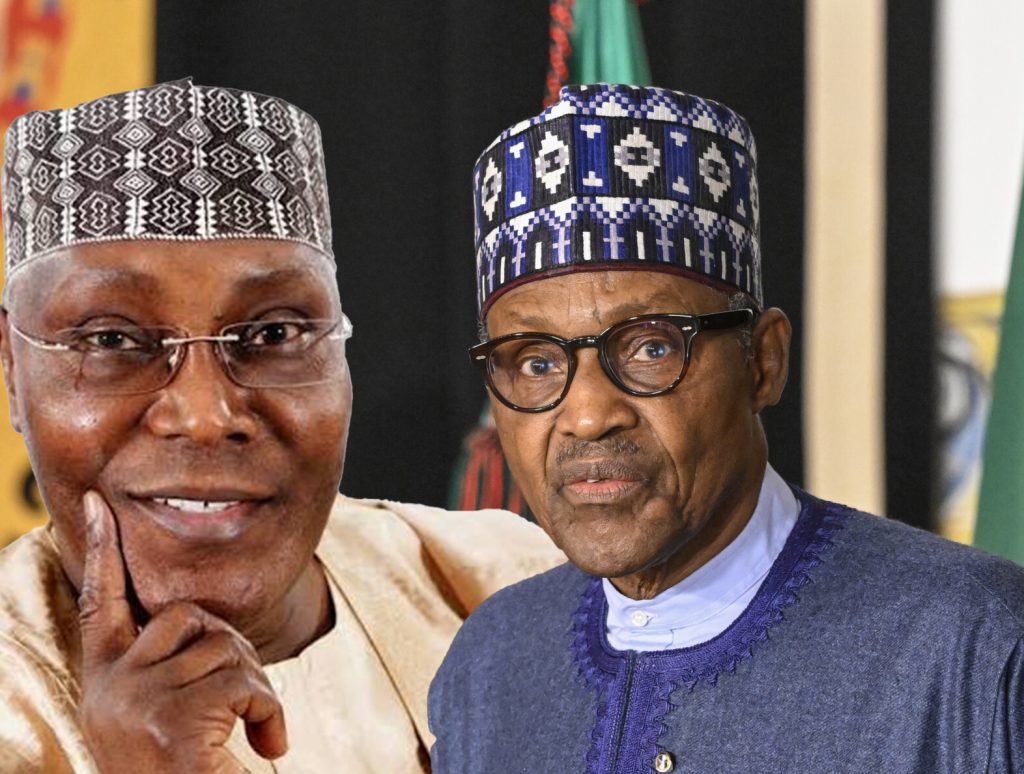
Barely a week after the Independent National Electoral Commission (INEC) declared President Muhammadu Buhari of the All Progressives Congress (APC) winner of the February 23, 2019 presidential election, his main challenger, Atiku Abubakar of the Peoples Democratic Party (PDP), began legal proceedings to challenge the outcome.
According to INEC, Buhari polled 15,191,847 votes, while Atiku secured 11,262,978 votes, a difference of 3,928,869 votes.
Atiku and the PDP, however, rejected the result, maintaining that it did not reflect what they described as the true wishes of the majority of Nigerians.
Announcing his decision to challenge the election, Atiku expressed confidence in the judiciary and said he believed the courts would fairly examine the issues surrounding the poll.
He said Nigeria’s judiciary had demonstrated courage in the past and expressed hope that judges handling the case would decide it without political pressure or interference.
Atiku and his legal team, led by Livy Uzoukwu, SAN, secured an order from the Presidential Election Petition Tribunal allowing them to inspect materials used for the election.
However, the tribunal rejected their request to conduct a forensic examination of ballot papers.
A three-member panel led by Justice Abdul Aboki held that the requested forensic audit was outside the provisions of the Electoral Act.
Atiku and the PDP nevertheless maintained that they possessed election results obtained from polling units and voting points across the country which, they claimed, differed from the figures announced by INEC.
Their decision to challenge the election was based on several allegations.
PDP National Chairman Uche Secondus argued that violence recorded during the Presidential and National Assembly elections in some parts of Nigeria raised concerns about the credibility of the process.
According to him, deaths and violent incidents during the election discouraged some voters from coming out to cast their ballots.
Although the military defended its activities during the polls, the PDP maintained that some of the incidents could have been prevented.
The opposition party also questioned the cancellation of more than 157,000 votes in Nasarawa State.
The PDP alleged that the cancellations reduced its support in the state and contributed to Buhari’s victory there.
Atiku Questions Accreditation in PDP Strongholds
Atiku also alleged that problems with smart card readers and voter accreditation affected turnout in areas where the PDP expected to perform strongly.
He cited Rivers and Akwa Ibom states, which had more than three million and two million registered voters respectively, but recorded significantly fewer accredited voters.
Although Atiku won both states, he argued that his margin of victory would have been much larger if more eligible voters had been successfully accredited.
The PDP also questioned voter turnout in Borno and Yobe states, arguing that the figures appeared unusually high considering the security challenges associated with Boko Haram insurgency in parts of the region.
Atiku similarly expressed concern that his victory margins in some PDP strongholds outside the South-South and South-East were smaller than expected.
PDP Accuses Security Agencies of Intimidation
The opposition party also raised concerns about the conduct of security agencies before and during the elections.
The PDP alleged that some of its prominent members were arrested or questioned shortly before the polls in what it described as an attempt to weaken their ability to mobilise voters.
The Economic and Financial Crimes Commission (EFCC), however, maintained that its actions were connected to investigations into alleged financial offences.
Atiku and the PDP rejected that explanation, arguing that the timing of some of the actions suggested political motives.
The PDP also disputed the results announced from some northern states.
In Yobe State, Buhari received 497,914 votes while Atiku polled 50,763.
In neighbouring Borno State, Buhari secured 836,496 votes compared with Atiku’s 71,788.
The PDP argued that the figures should be independently examined to determine whether they accurately reflected the votes cast.
Atiku’s campaign maintained that an examination of election materials, accreditation records and other documents would help establish the credibility of the results.
Despite calls from some prominent Nigerians urging Atiku to accept the result and congratulate Buhari, his campaign insisted that pursuing the matter in court was the appropriate democratic option.
Spokesman for the Atiku Presidential Campaign Organisation, Kassim Afegbua, criticised suggestions that the former Vice President should abandon his legal challenge.
He argued that the courts existed to resolve disputes and that Atiku had every constitutional right to seek legal redress.
Afegbua also said Atiku’s legal team intended to appeal the tribunal’s refusal to permit forensic examination of the ballot papers.
According to him, forensic analysis could help determine whether there had been multiple voting, irregular thumb-printing or other forms of electoral malpractice.
He added that the legal team would examine other election materials in an attempt to identify possible discrepancies between polling-unit records, accreditation figures and the final results announced by INEC.
The campaign maintained that the legal challenge was also intended to test the country’s electoral laws and strengthen future elections.
With Atiku determined to pursue his grievances through the judiciary, the political contest between Buhari and the PDP candidate entered a new phase, moving from the ballot box to the courts.