Why Atiku Lost: Vote Cancellations, Internal Divisions and Strategic Miscalculations
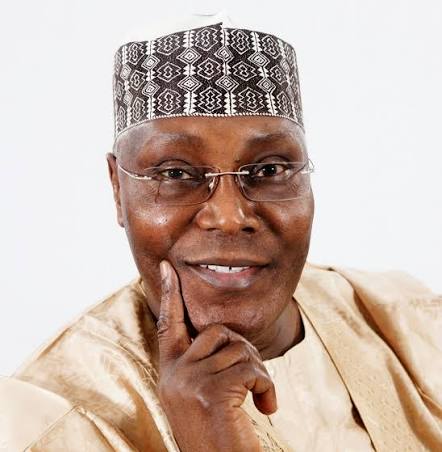
The Peoples Democratic Party (PDP) entered the 2019 presidential election with considerable optimism, but its candidate, former Vice President Atiku Abubakar, ultimately lost to incumbent President Muhammadu Buhari of the All Progressives Congress (APC).
The Independent National Electoral Commission (INEC) declared Buhari winner of the election after he secured a majority of the votes nationwide.
Ahead of the polls, the PDP had mounted an energetic campaign across the country. With Atiku as its presidential candidate, the party travelled extensively, promoting its campaign message of “Getting Nigeria Working Again” and presenting proposals aimed at reviving the economy, improving security and creating jobs.
Despite the confidence surrounding the campaign, the announcement of results at the National Collation Centre in Abuja gradually revealed a widening gap between Buhari and Atiku.
While Atiku performed strongly in the South-East and South-South and remained competitive in parts of the South-West, Buhari’s overwhelming advantage in the North-West and North-East proved decisive.
Several political and electoral factors contributed to the PDP’s defeat.
Defections Helped and Hurt the PDP
Before the election, the PDP received a major boost from the defection of several prominent politicians from the APC.
Kwara State Governor Abdulfatah Ahmed, Sokoto State Governor Aminu Tambuwal and Benue State Governor Samuel Ortom all moved to the PDP.
Senate President Bukola Saraki and House of Representatives Speaker Yakubu Dogara also joined the opposition party, strengthening expectations that the PDP could mount a serious challenge to Buhari.
However, the PDP also lost influential members to the APC.
Among them were former PDP National Chairman Adamu Mu’azu, former Delta State Governor Emmanuel Uduaghan, former Enugu State Governor Sullivan Chime and former Senate Minority Leader Godswill Akpabio.
Although Atiku performed competitively in some of their states, the departure of these political figures weakened the PDP’s structures and potentially moved some supporters toward the ruling party.
The party also suffered defections in northern states. Garba Gamawa, who had served as PDP Deputy National Chairman in the North, and Saidu Kumo, a member of the PDP Presidential Campaign Council, defected to the APC.
Their exits contributed to internal weaknesses in Bauchi and Gombe states, both of which Buhari eventually won.
Cancelled Votes
The cancellation of votes in some states also became a major point of controversy.
In Nasarawa State, more than 157,000 votes were reportedly cancelled, with INEC citing electoral violence and related irregularities.
The PDP argued that the cancellations significantly affected its chances in the state.
PDP National Publicity Secretary Kola Ologbondiyan maintained that without the cancelled votes, the party might have defeated Buhari in Nasarawa, a state that had supported PDP presidential candidates in previous elections.
Internal Conflicts Weakened PDP
Internal divisions within the PDP also affected its performance in several states.
In Ekiti State, disagreements between former Governor Ayodele Fayose and Senator Biodun Olujimi weakened party unity ahead of the election.
Although both figures remained members of the PDP, their political rivalry contributed to divisions within the party.
Buhari eventually secured 219,231 votes in Ekiti, while Atiku received 154,032.
A similar situation occurred in Ogun State, where the party was divided between factions associated with Ladi Adebutu and Senator Buruji Kashamu.
The internal struggle weakened the PDP’s ability to present a united front and provided an advantage to the APC.
Buhari received 281,762 votes in Ogun State, while Atiku secured 194,655.
Violence and Low Voter Turnout
Election-related violence in Rivers and Lagos states also contributed to voter apathy.
Lagos had more than six million registered voters, but turnout was considerably lower than the number of eligible voters suggested.
Rivers State, another important PDP stronghold, also recorded relatively low turnout.
Out of more than three million registered voters in the state, fewer than one million participated in the presidential election.
The PDP had expected Rivers to deliver a much larger number of votes for Atiku. Instead, he recorded 473,971 votes compared with Buhari’s 150,710.
Although Atiku comfortably won the state, the low turnout reduced the overall number of votes the PDP could add to its national total.
North-West Proved Decisive
Perhaps the biggest strategic disappointment for Atiku came from the North-West.
The PDP had hoped to significantly reduce Buhari’s dominance in the region, particularly outside Katsina, the President’s home state.
The party believed influential political figures such as Rabiu Kwankwaso in Kano, Sule Lamido in Jigawa, Tanimu Turaki in Kebbi, Ahmed Makarfi in Kaduna and Aminu Tambuwal in Sokoto would help deliver substantial votes for Atiku.
These politicians had combined their political structures behind the PDP presidential candidate, creating expectations that the party could make major gains in the region.
However, Buhari maintained his dominance across the North-West, winning states the PDP had hoped to either capture or substantially narrow.
The inability of Atiku’s prominent northern allies to deliver their states ultimately became one of the most important factors in his defeat.
INEC’s Conduct
INEC also faced considerable criticism during the election period, particularly after postponing the election shortly before voting was originally scheduled to begin.
Both APC National Chairman Adams Oshiomhole and PDP National Chairman Uche Secondus criticised the commission, with both parties at different times questioning its handling of the electoral process.
Following the rescheduled election, however, the polls were conducted relatively peacefully in many parts of the country, although incidents of violence, vote cancellation and electoral irregularities were reported in several areas.
The defeat of several powerful politicians, including Godswill Akpabio in Akwa Ibom and George Akume in Benue, was cited by some observers as evidence that voters were able to make meaningful choices in a number of constituencies.
INEC also introduced simultaneous accreditation and voting, replacing the earlier system in which accreditation and voting were carried out separately.
The process allowed voters to cast their ballots shortly after accreditation and helped shorten the voting period at many polling units.
In the end, Atiku’s defeat resulted from a combination of factors, including internal PDP divisions, defections, cancelled votes, election-related violence, low turnout in some opposition strongholds and, most importantly, Buhari’s continued dominance in the North-West and North-East.