Saraki to FG: You Cannot Fight Corruption With Corruption, Questions N2.4 Billion Fuel Subsidy Spending
Saraki Accuses FG of Rising Corruption, Questions N2.4bn Fuel Subsidy Spending
Senate President Bukola Saraki has accused the administration of President Muhammadu Buhari of failing to demonstrate transparency in the management of the country’s fuel subsidy programme, arguing that a government fighting corruption must also ensure accountability in its own spending.
Saraki raised the concerns while appearing on AIT’s Kakaaki programme. He questioned the Federal Government’s claim that Nigerians were consuming about 50 million litres of petrol daily, saying the figure was significantly higher than the 30 million litres per day reportedly recorded during the administration of former President Goodluck Jonathan.
According to Saraki, the higher consumption figure and the amount being spent on subsidy deserved greater scrutiny, particularly since the previous administration had been heavily criticised over alleged corruption in the subsidy system.
He argued that fuel subsidy itself was not necessarily fraudulent but could become problematic if it was poorly managed or lacked transparency.
Saraki also accused the executive arm of government of frustrating efforts by the Senate to investigate subsidy payments. He said several committees had been established to examine the issue but claimed lawmakers repeatedly encountered difficulties obtaining the necessary cooperation from the government.
The Senate President further criticised the use of what the government described as “under-recovery” to fund subsidy payments without proper appropriation by the National Assembly.
“For two years, we made several representations to the executive that subsidy claims should be presented for appropriation,” Saraki said, insisting that government spending must remain subject to legislative oversight.
He maintained that President Buhari, as head of the government, should take responsibility for the actions of his administration and should not be exempt from the same standards used to assess previous governments.
Saraki, who was also Director-General of the Peoples Democratic Party Presidential Campaign Council, criticised the trial of then Chief Justice of Nigeria Walter Onnoghen before the Code of Conduct Tribunal, describing the development as troubling.
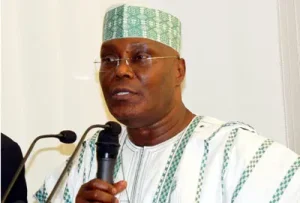
Speaking on PDP presidential candidate Atiku Abubakar’s visit to the United States, Saraki dismissed claims that Atiku had travelled as one of his aides.
He described the allegation as political propaganda, saying Atiku travelled to the United States on his own merit.
According to Saraki, criticism of Atiku’s previous inability to visit the United States had become a major campaign issue for the ruling All Progressives Congress, making the visit significant in putting the controversy to rest.
Saraki also expressed confidence that the PDP would defeat the APC in the forthcoming presidential election.
He argued that widespread insecurity, unemployment and economic difficulties had weakened support for the ruling party in areas where it performed strongly during the 2015 election.
Saraki said the PDP was gaining support in traditional APC strongholds, particularly in parts of the North-West and North-East, and maintained that Atiku possessed the economic experience needed to address Nigeria’s challenges.
On Atiku’s absence from a presidential debate, Saraki explained that the PDP candidate had expected President Buhari to participate. He said the party considered direct engagement between the two leading candidates important because the presidential contest was largely between the APC and PDP.
Turning to the Independent National Electoral Commission, Saraki said he was willing to give the electoral body the benefit of the doubt but urged it to demonstrate neutrality and ensure the elections were free and fair.
He acknowledged concerns among some Nigerians about INEC’s impartiality and called on the commission to take steps that would reassure the public of its commitment to conducting credible elections.